Visit to Stephen Wright at Künstlerhaus Stuttgart

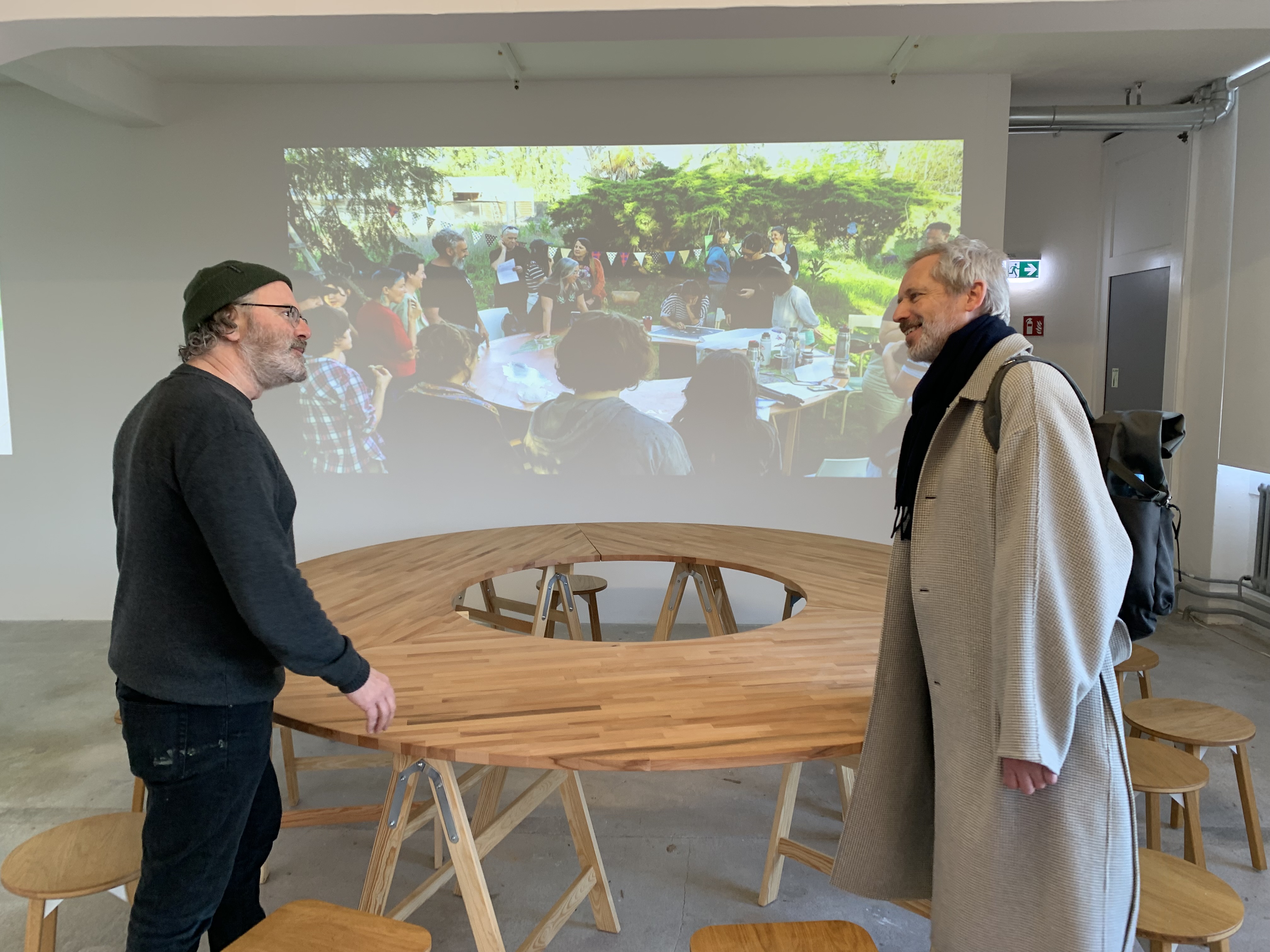
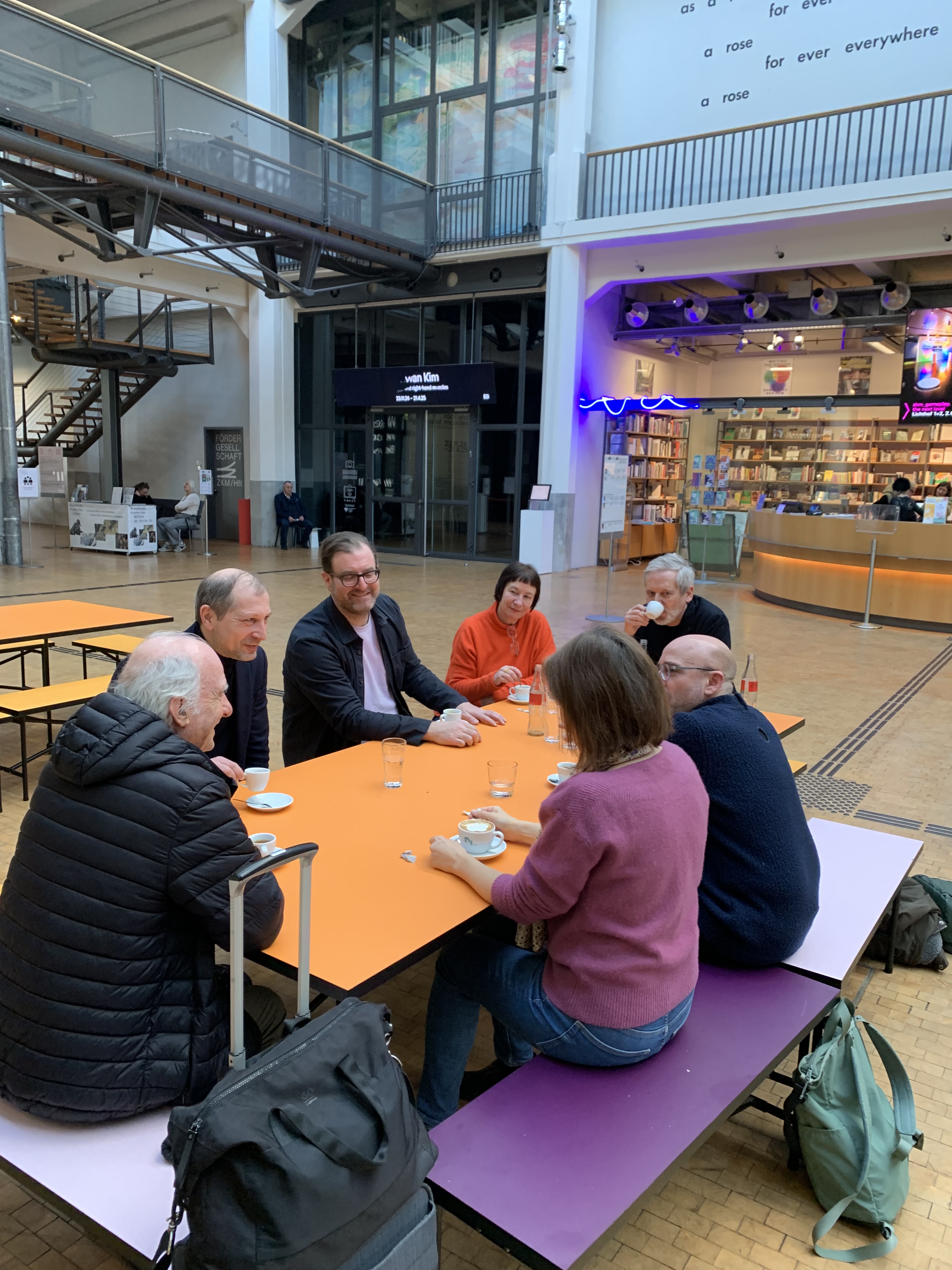
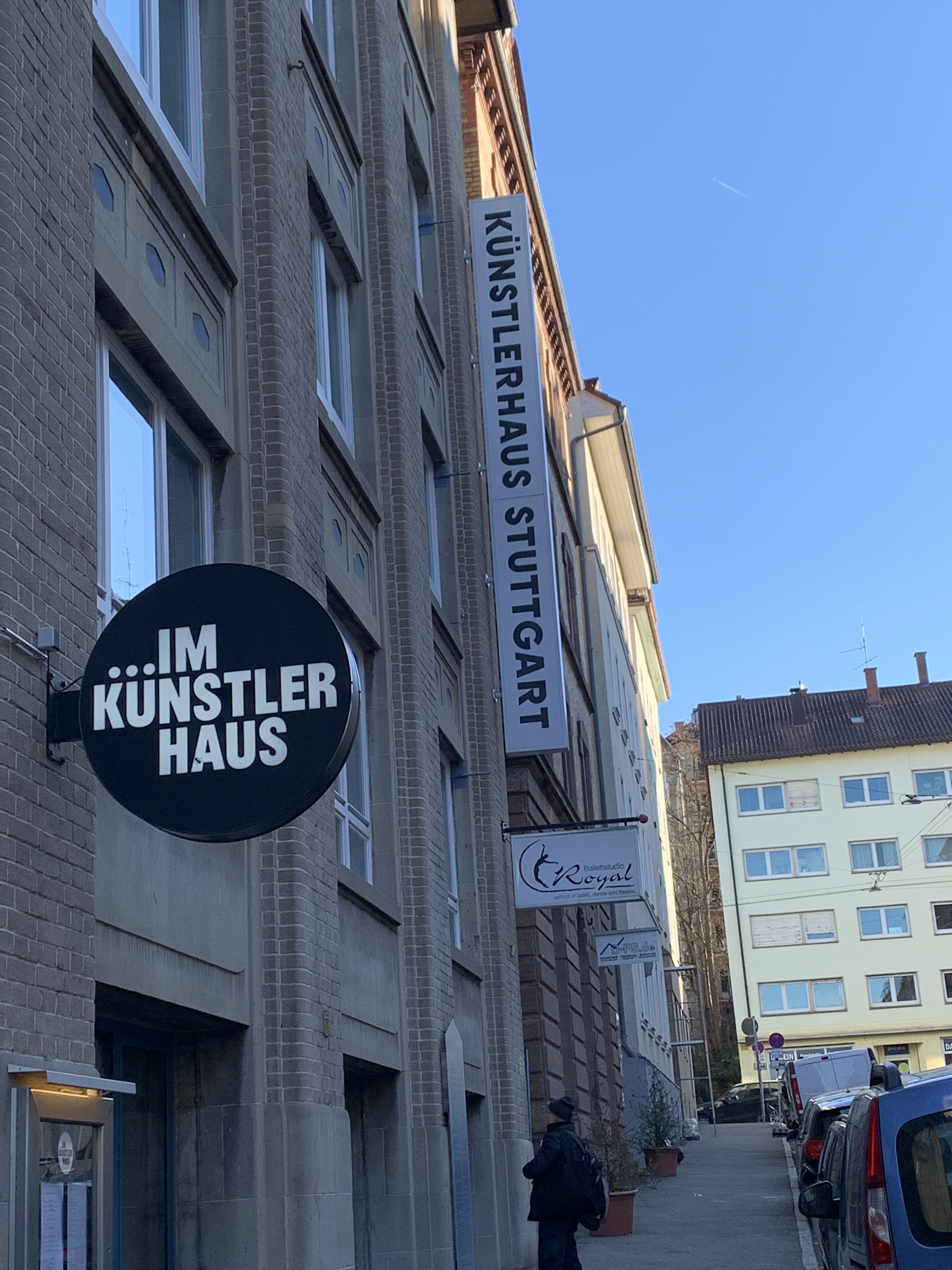
On Saturday 1st February 2025 I was able to visit long term colleague and friend Steven Wright at his new curatorial home at the Künstlerhaus Stuttgart. Wright, and his partner Tamarind Rossetti, took over as Artistic Directors of Stuttgart Künstlerhaus the previous year (January 2024). Founded in 1978 Stuttgart Künstlerhaus has a novel approach to artistic directorship – engaging each director (or directorial team) for a fixed three-to-four-year period as a means to ensure that cutting edge practice and discourse, coupled with experimental approaches to both exhibition making and the distribution and reception of contemporary art.  

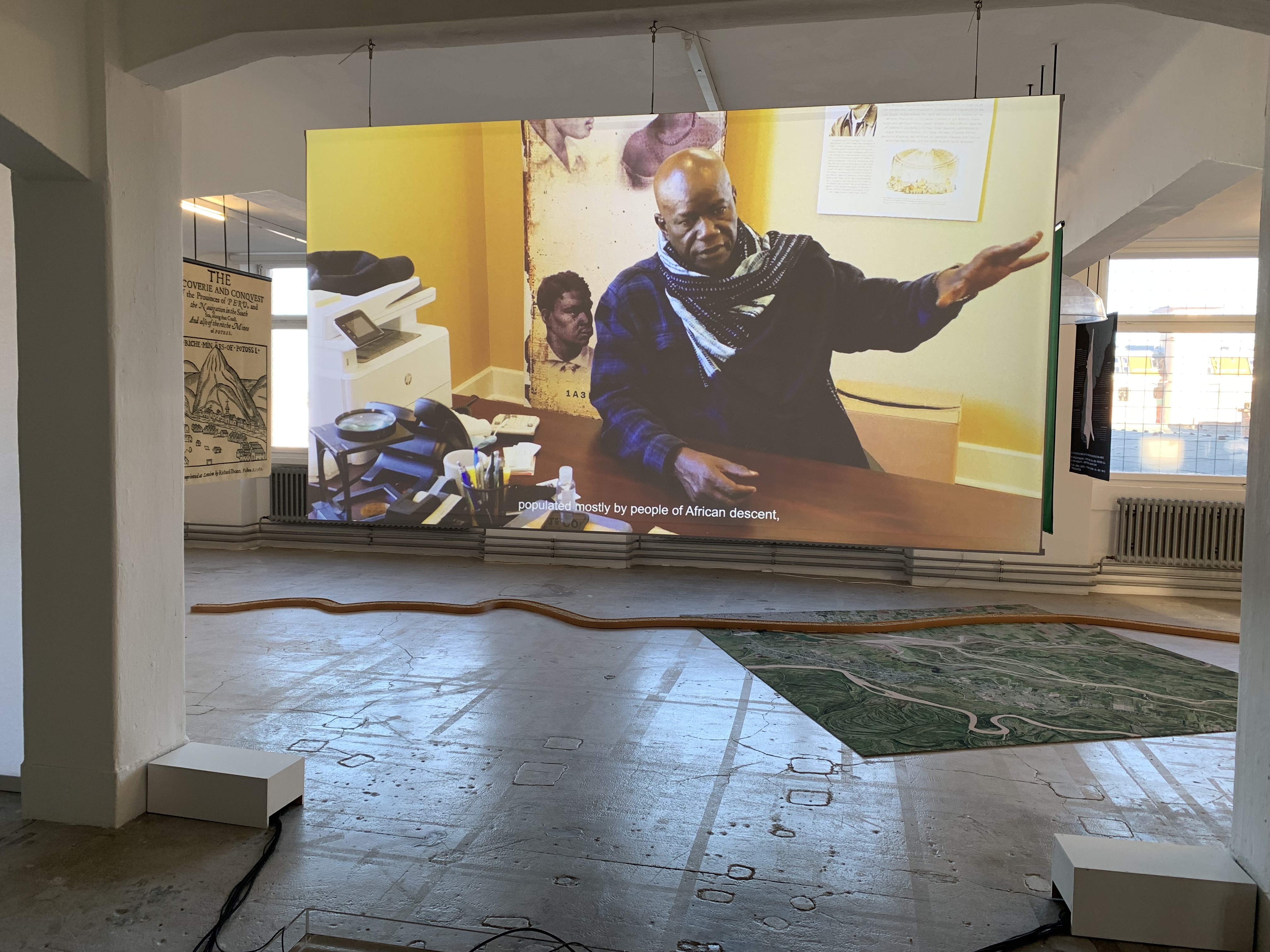
Previously, In 2018, Rossetti and Wright founded a 1:1 scale agroecological test site called Ferie au Sauvage for growing organic fruits and vegetables, where they offered farm-to-table meals and farm-to-panel workshops (called “ideaseeding”), ran a farm store in the studio, and documented the project through art. Currently they are operating a permaculture farm and research project in Corrèze, France. Seeing their new role at Stuttgart Künstlerhaus as “an opportunity to implement ideas gleaned over the years from usology and permaculture, from art education, publishing and exhibition making, in an ‘extradisciplinary’ environment”, my visit coincided with the installation of Riverpmap, a series of online/offline interventions into the space of the Künstlerhaus in which Brian Holmes has mapped the social, economic, political and environmental river flows of the the American Midwest, the Pacific Northwest coast and the La Plata Basin in South America. As the Künstlerhaus webste attests “Holmes was previously known in European art and activist circles as an essayist and public speaker, and over the course of these years he has invented a new but strangely familiar genre, the essay map, filled with written text, scientific visualization and multimedia image.” Künstlerhaus Stuttgart opens “Brian Holmes: Rivermap”
First ZKM Visit

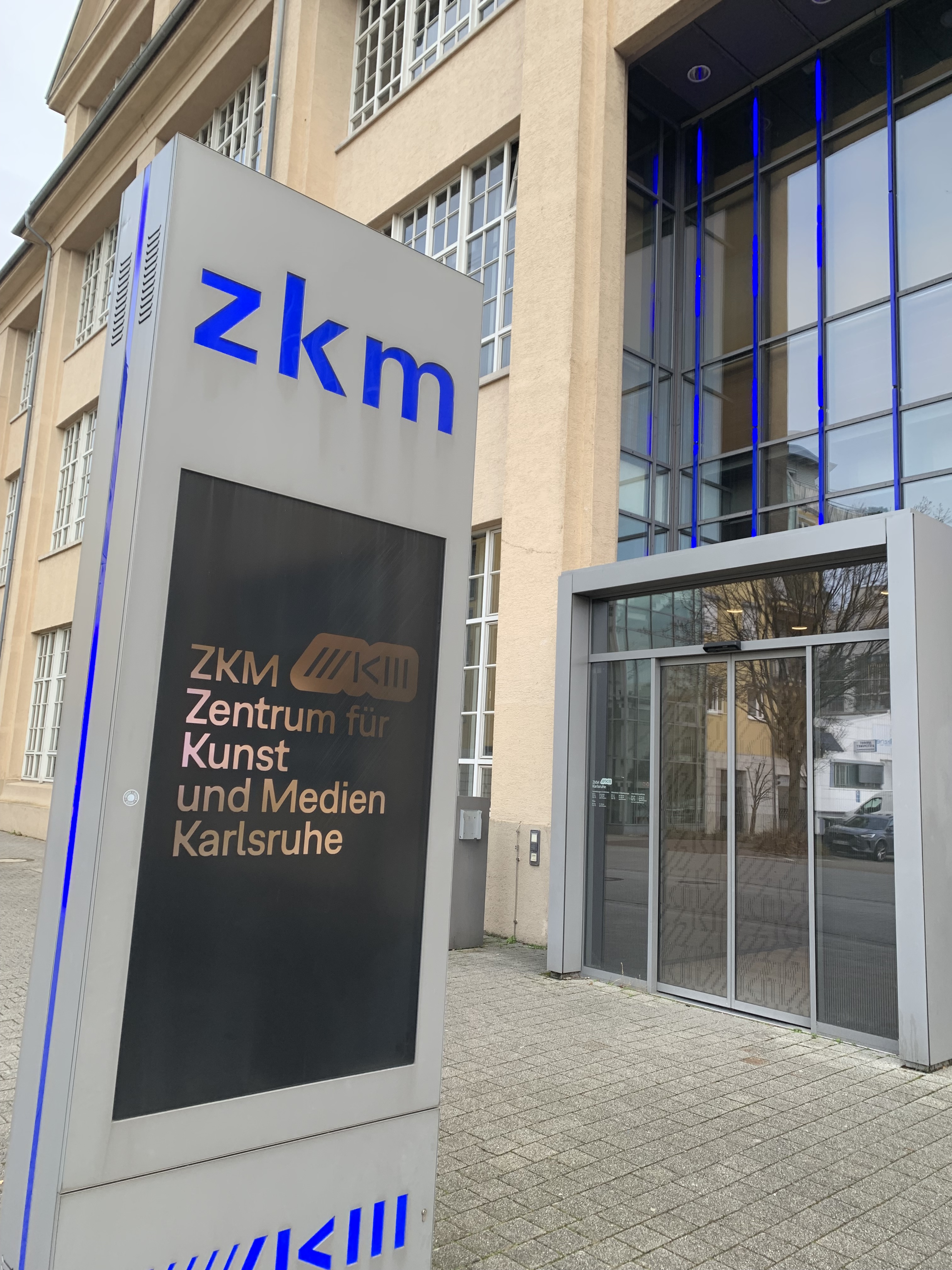
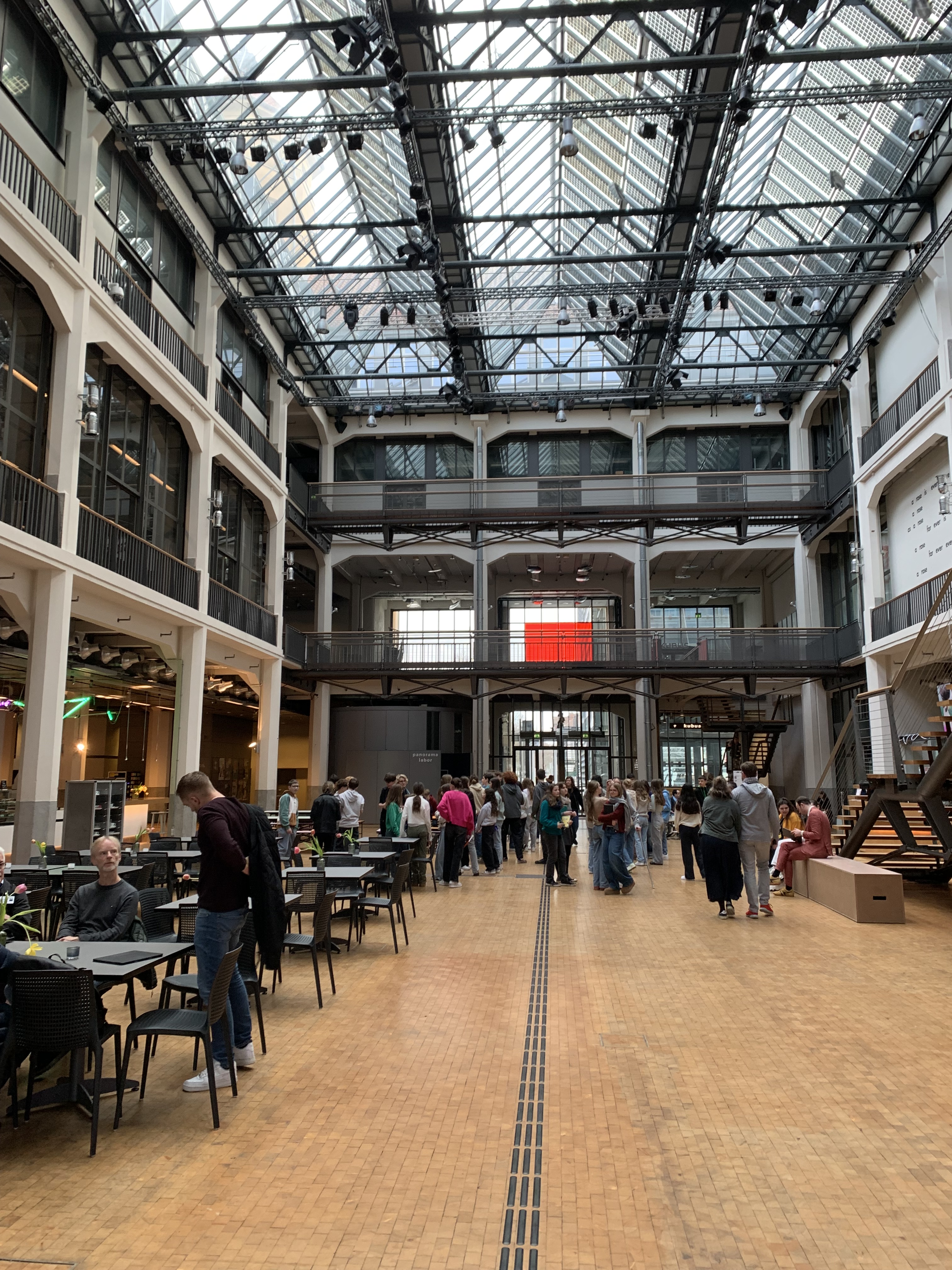
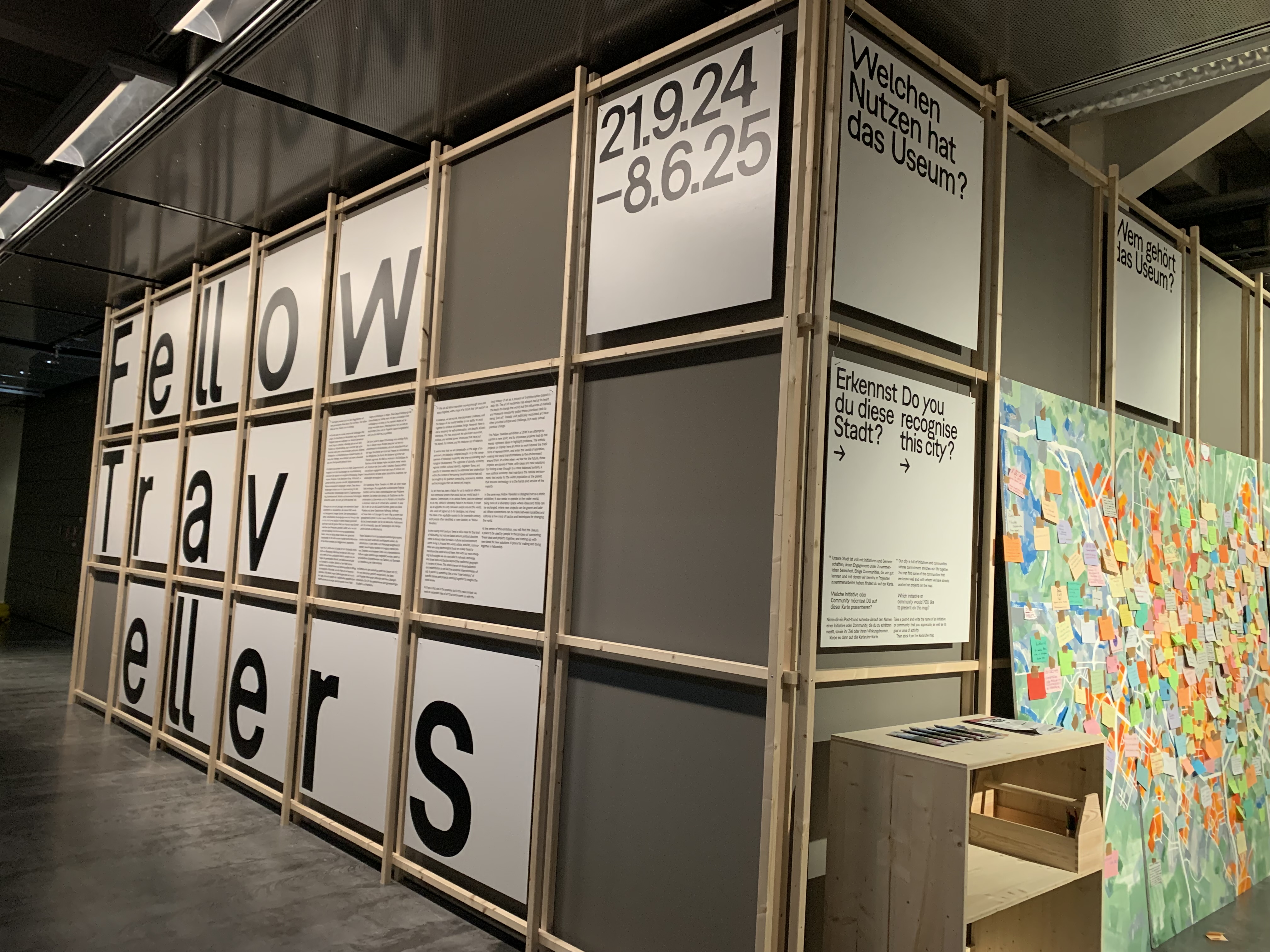
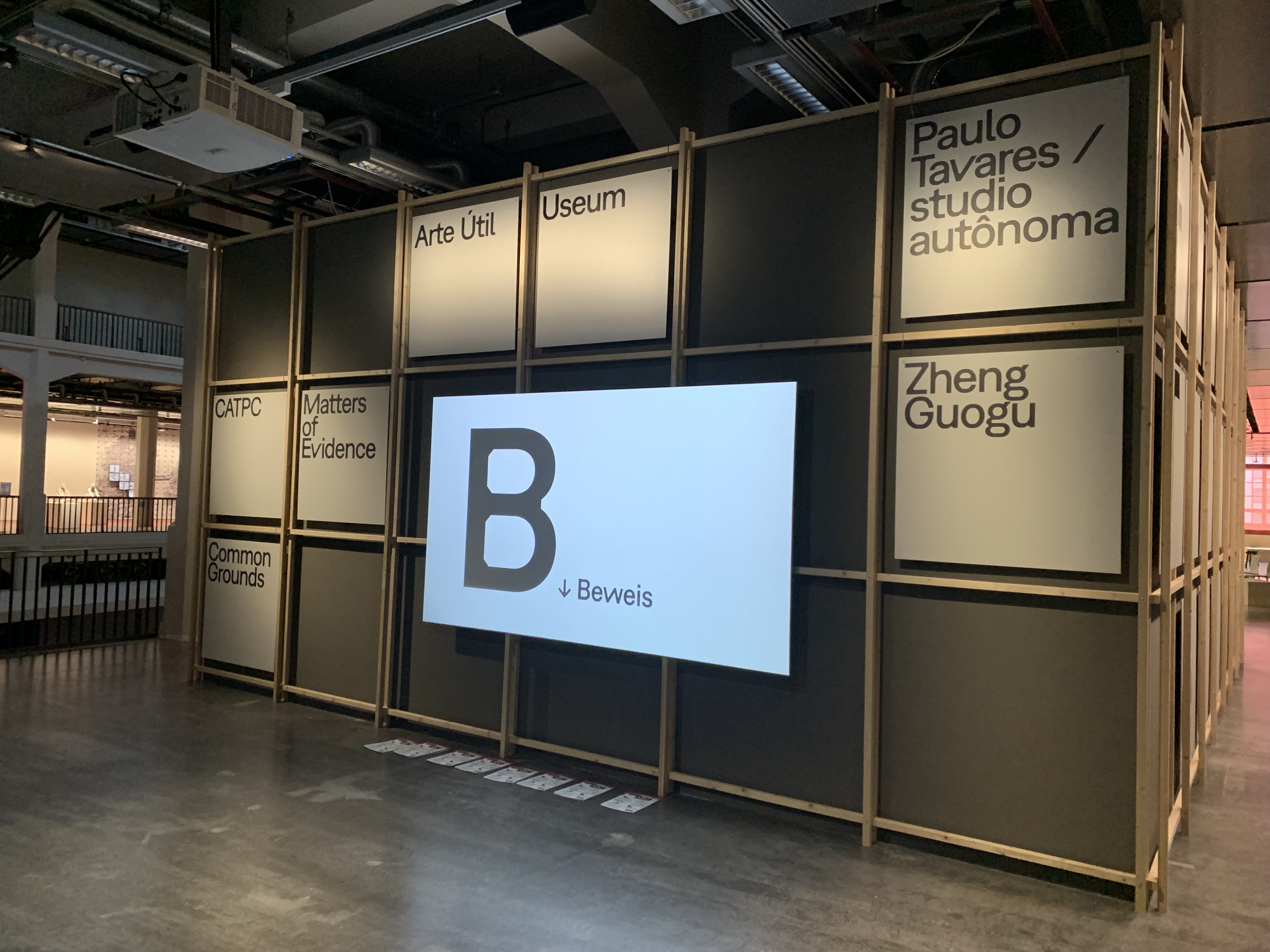
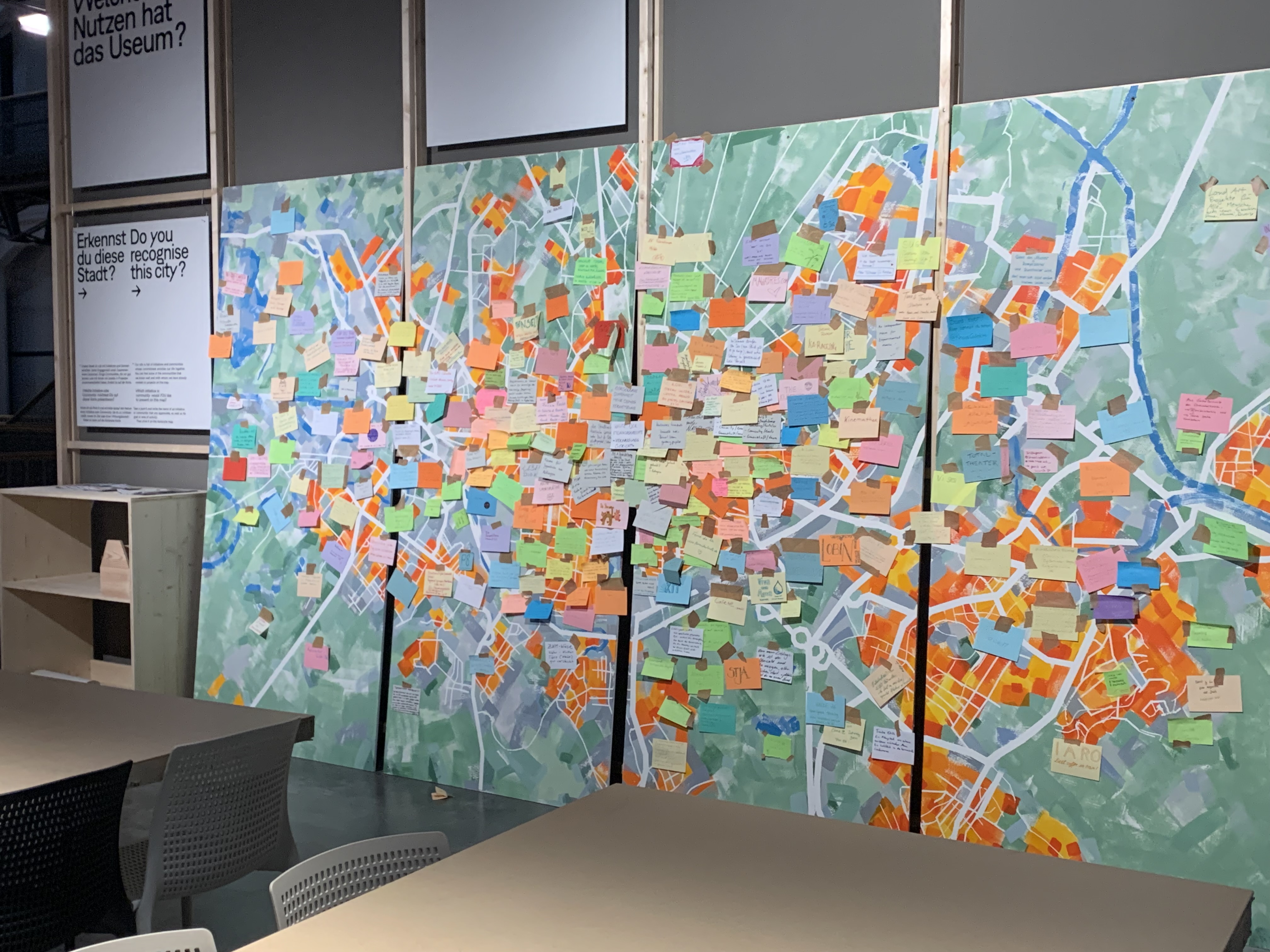
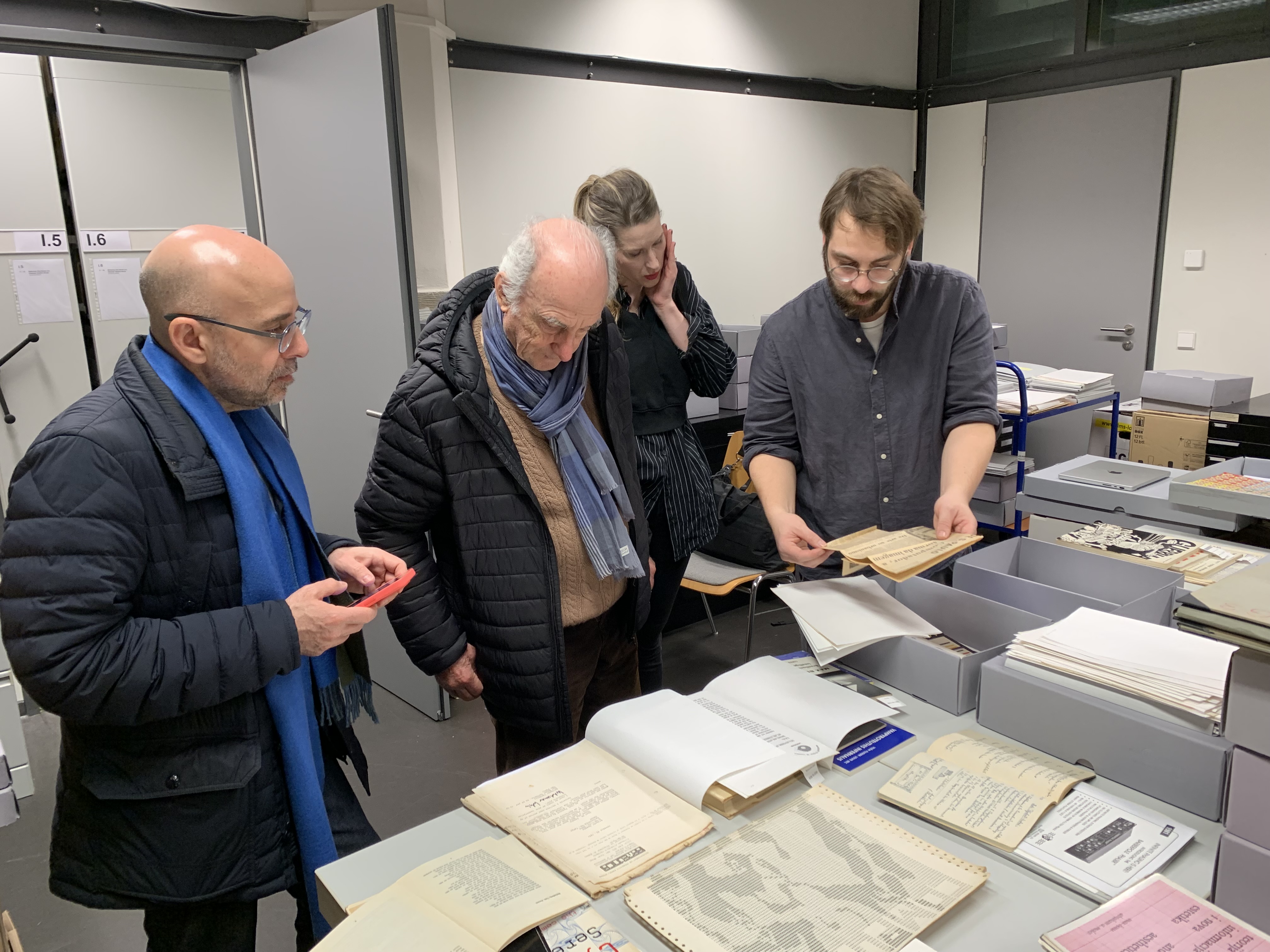
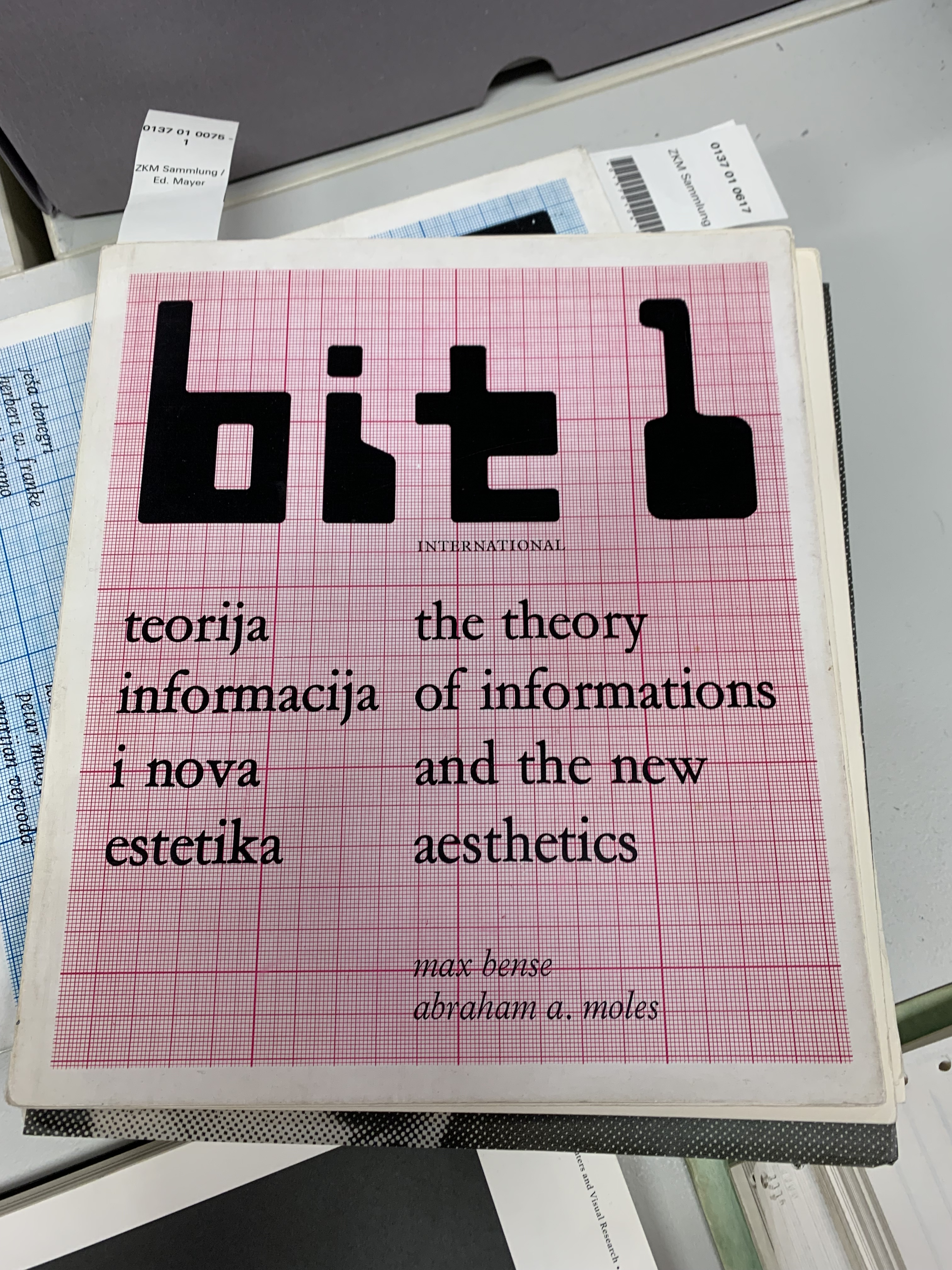
On 29th January 2025 I was able to pay my first visit to ZKM (Centre for Art and Media Karlsruhe)since my close colleague and longtime collaborator Alistair Hudson took over as their Scientific-Artistic Chairman of the ZKM. The purpose of my visit was primarily to look at the new developments that Hudson is instigating at ZKM via their ongoing ‘Fellow Travellers – Art as a tool to change the world’ exhibition. and was to meet staff at ZKM who might want to develop further collaborations around Useful Art, Technology and Social Change.

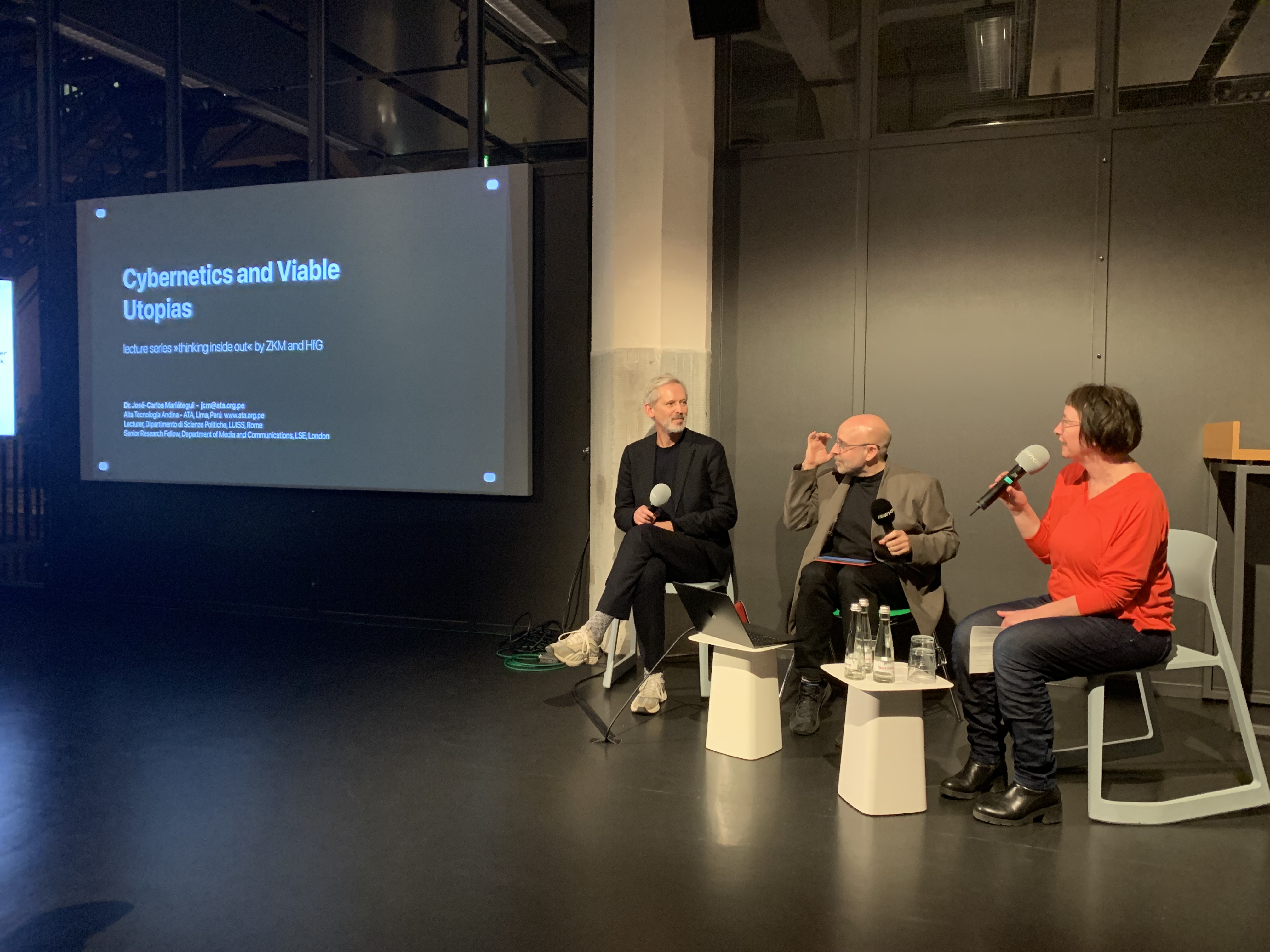
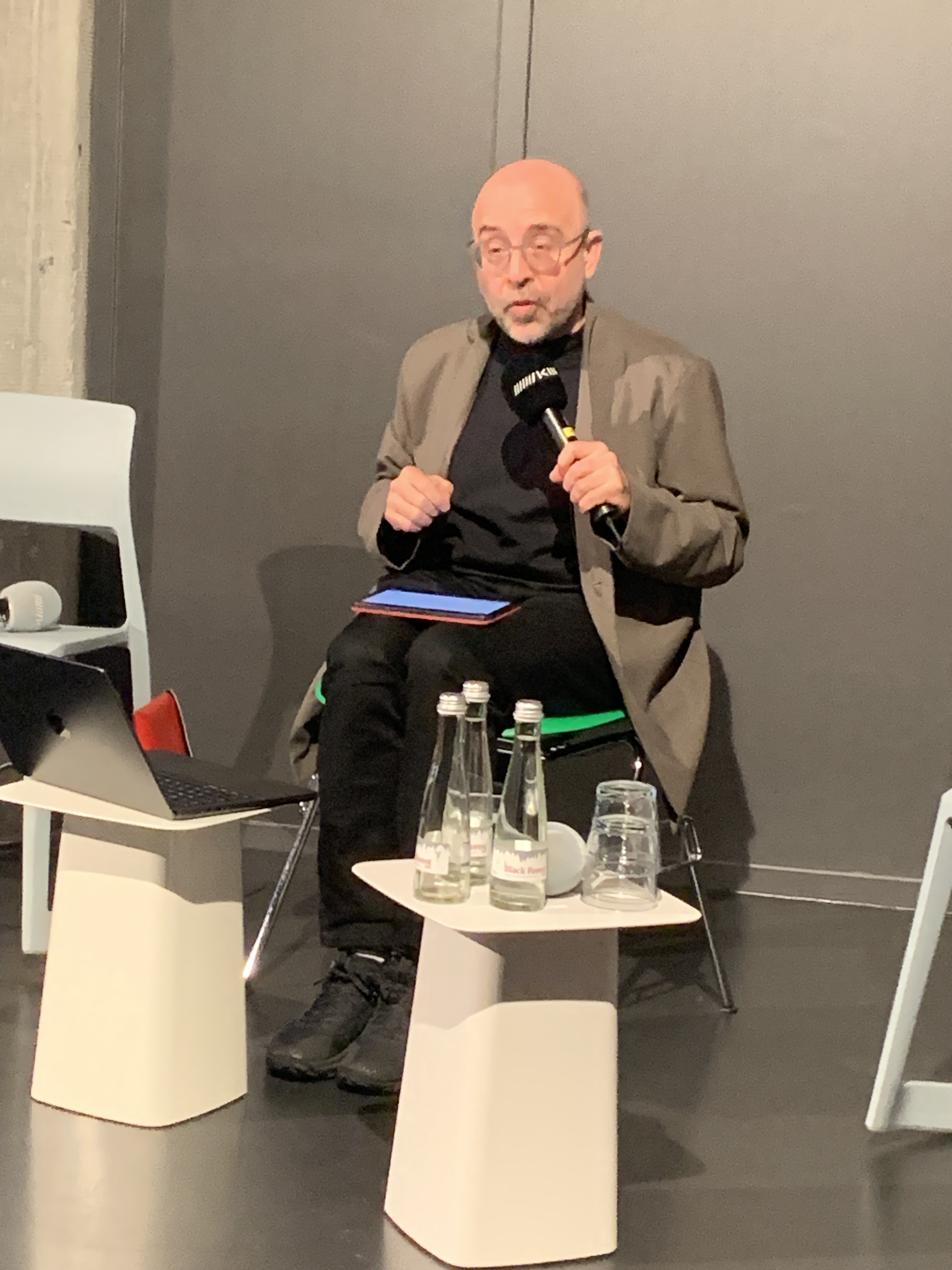
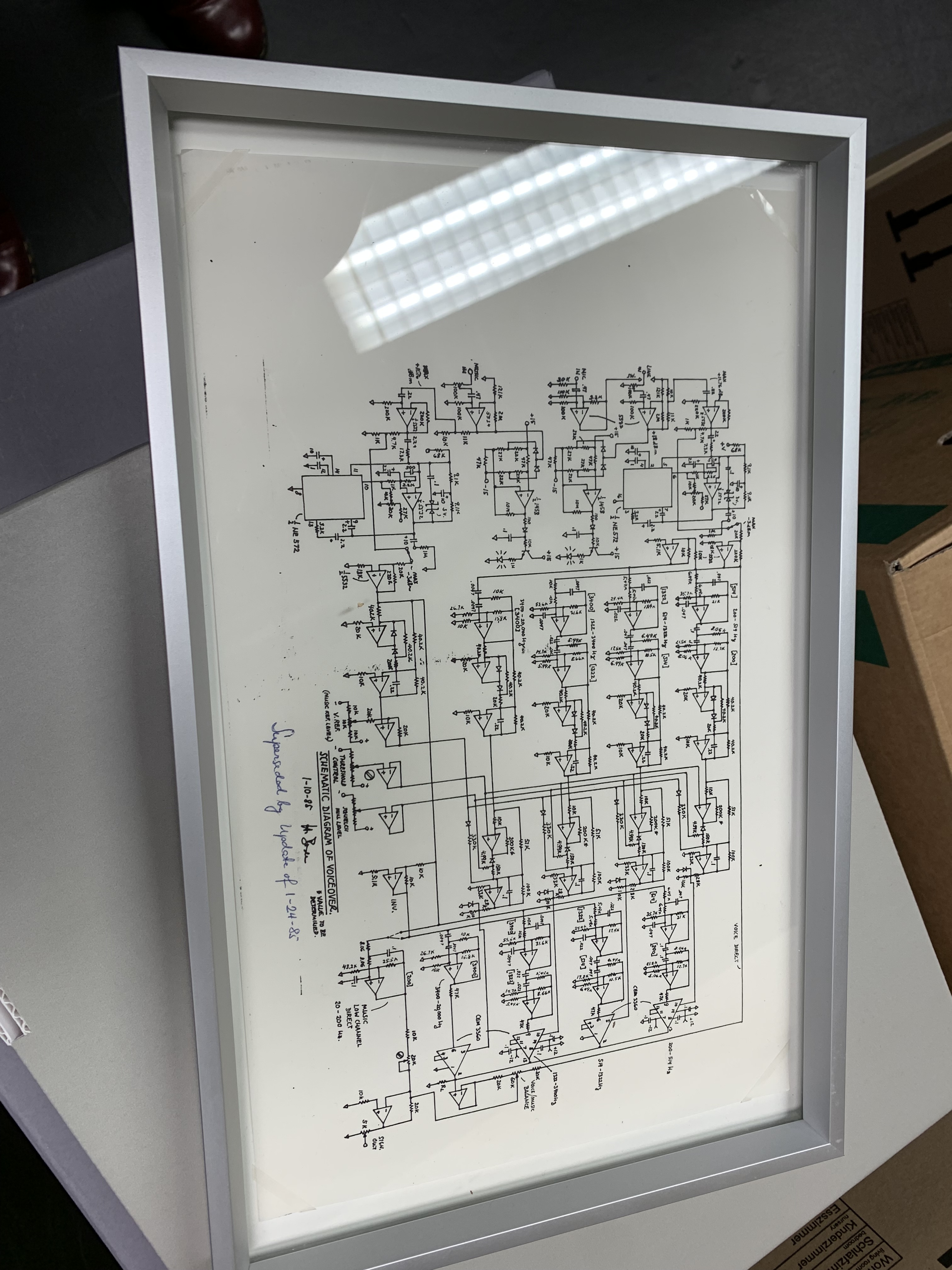
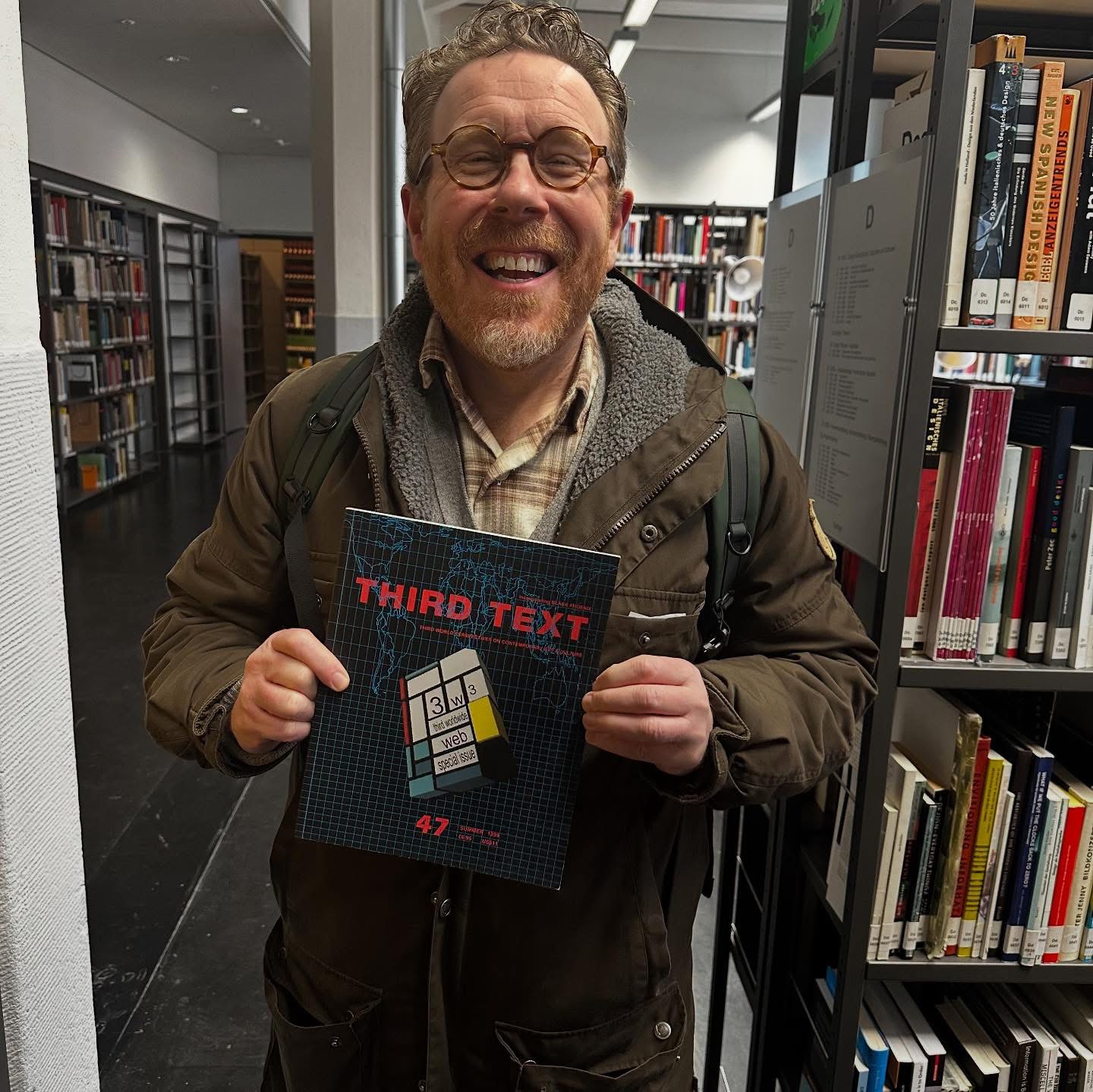
Whilst there, it was good to see a copy of the 1999 Third Text ‘Third World Wide Web’ special edition which has my article ‘Cybersublime: Representing the unrepresentable in digital art and politics’ (a pdf of which is on the ‘Writing’ page of this website). It was even nicer for the serendipities to follow as, after twenty-seven years to re-acquaint myself with the wonderful Dr. José-Carlos Mariátegui who was presenting his paper ‘Thinking Inside Out: Cybernetics and Viable Utopias’. Another of the key reasons I’d made a visit to ZKM was to discuss the possibility of a project that would use/re-activate LJMU’s Stafford Beer archive, especially the documents, videos and records we have pertaining to his famous ‘Project Cybersyn’ – which say Beer collaborate with the Allende government in Chilie to develop a decentralised operational communication system that, ultimately, would enable Chilie to be run by it’s citizens from the ground upwards.

I’d first met José-Carlos back in 1998 in Liverpool. I’d co-written the bid to bring ISEA (The International Symposium of Electronic Arts) to Liverpool and Manchester in 1998. As part of the ‘Revolution’ symposium in Liverpool I had curated the panel ‘Mediated Nations’ which , as well as José-Carlos’s paper ‘Techno-revolution’, contained contributions from  Marguerite Byrum (John Hopkins) ‘A Manifesto for Electric Propagandists’, Dee Dee Halleck ‘Deep Dish Satellite Network’, Olga Kisseleva ‘Anticipated Future – Controller and Controlled: interchangeability’ and Hikmet Tabak who, as  Director of MED TV – gave an Introduction to MED TV before a special live edition of MED TV’s Zaningeha Med (University Med)’ broadcast. As outlined in the introduction to my Third Text paper Representing the unrepresentable in digital art and politics’ “this took the form of a discussion programme focusing on the impact of technology on cultural identity. Using phone-in, fax and e-mail interactivity, guests in Med TV’s Belgian studios (who included the programme’s producer and host Joe Cooper, Gilane Tawadros, Director of in IVA, Mustafa Rasid, specialist in Kurdish Folklore and Computer Engineering and the artist Simon Tegala) were joined, via phone, by Professor Amir Hassanpour of the Department of Near and Middle Eastern Civilisation at the University of Toronto, and by Dee Dee Halleck and José-Carlos Mariátegui who phoned in questions from the panel session in Liverpool, UK According to the October 1998 edition of Med TV’s Sterka Med newsletter.